
New This Week: Live Signals and Better Idea Validation
Trend Seeker's matched-signal corpus grew 22% in seven days, with Apple App Store reviews, live signal discovery, and clearer idea-validator results.
6 min read

Introduction
Since the July 24 product update, Trend Seeker has added more evidence to the Signal explorer and made idea validator results easier to interpret. Live Signals is a discovery feed. An idea's own Signals tab remains the place to research evidence attached to that idea.
Signal Coverage Grew 22% in Seven Days
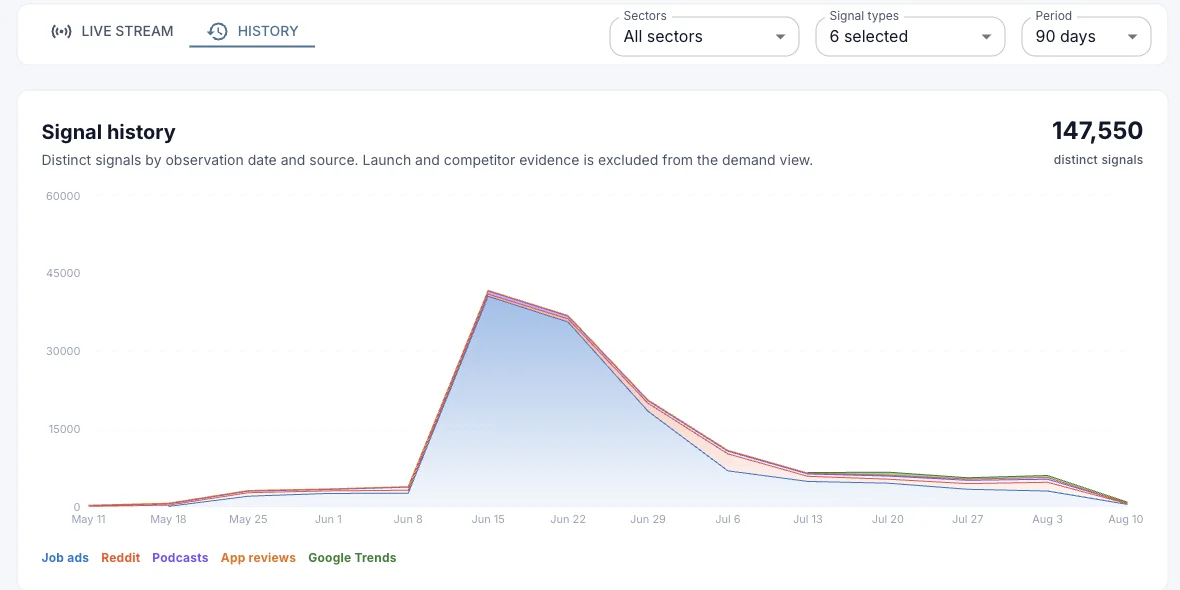
As of August 11, 2026, 191,507 distinct signals had reached an idea match. The corpus added 34,548 first-matched signals during the previous seven days, increasing its size by 22%. It added 78,795 during the previous 30 days, a 70% increase. These figures count each logical signal once, on the date it first reached an idea match.
Apple App Store reviews are now part of that evidence pipeline. Trend Seeker collected 5,768 Apple reviews during the seven-day window. Of those, 3,912 met the signal quality checks and 2,026 reached at least one idea match. Reviews that did not describe a useful problem remain in the review store instead of being presented as market evidence.
| Where | What it shows | Use it for |
|---|---|---|
| Live Signals | Recent evidence across the full pipeline and the ideas it matched | Discovering new or newly updated ideas |
| Idea Signals | Reviews, discussions, trends, and launches attached to one idea | Researching a selected idea in context |
| Validator | Compare the score breakdown, closest market, demand trend, competitors, and matching evidence | Testing a specific version of an idea |
Browse Live Signals as a Discovery Feed
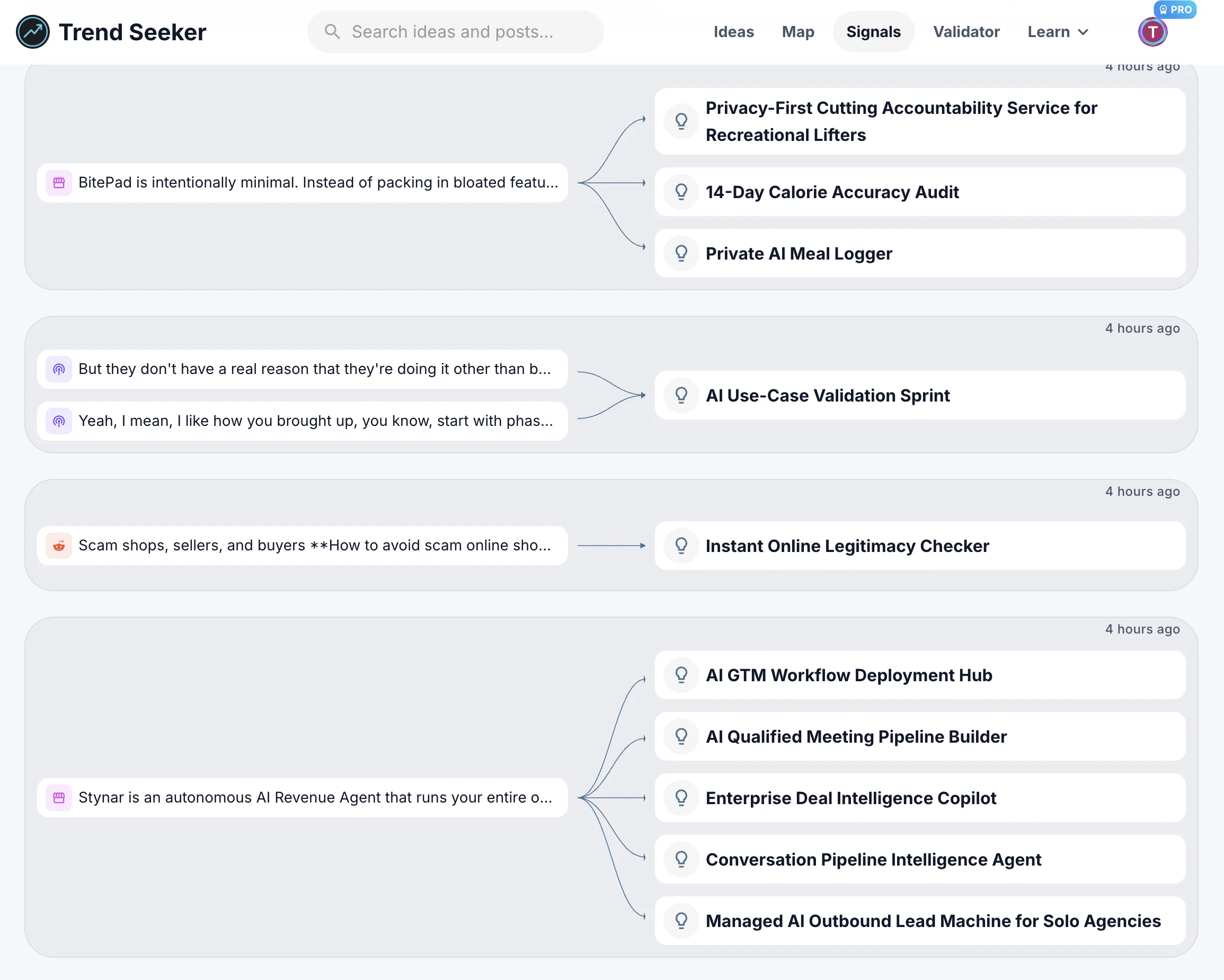
Live Signals works like a feed of new evidence. It shows each item beside the ideas it created or updated, which makes it useful when you do not yet have a specific idea in mind. The example below includes product launches, podcast passages, and a Reddit discussion. These sources answer different questions: launches show supply, podcasts add practitioner context, and community posts show how people describe a problem.
More Product Feedback, With Its Source Attached
The Signal explorer now includes public app-review evidence from sources such as Apple App Store, Google Play, and the Atlassian Marketplace. The product and marketplace stay attached to the review, so you can distinguish a specific recommendation or complaint from a general market claim. One review can also connect to several ideas when it supports more than one problem or product direction.
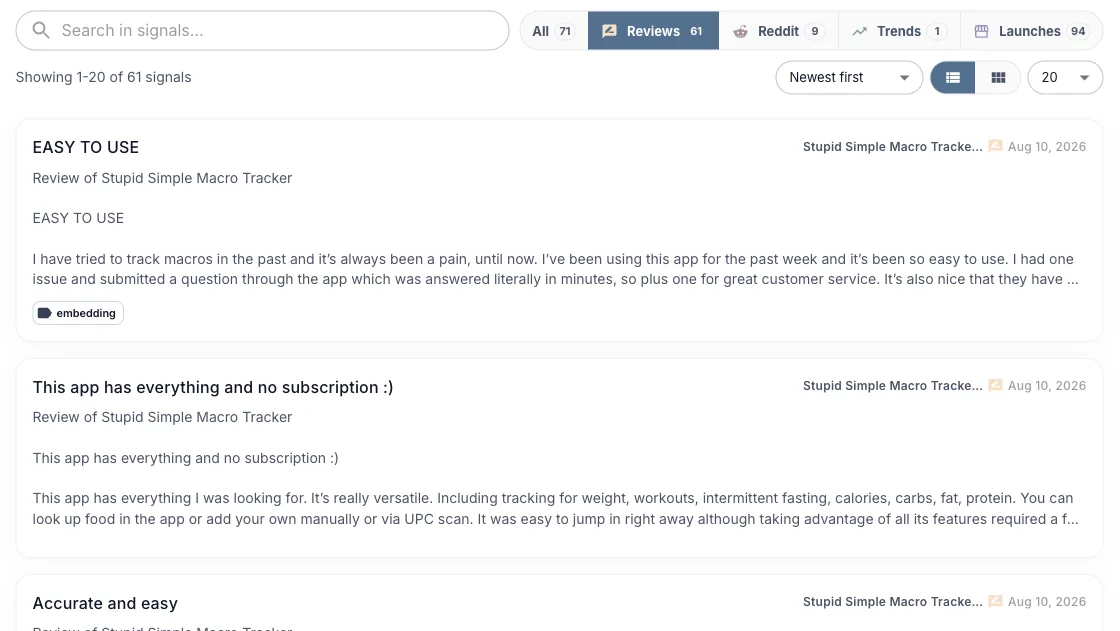
Source labels matter because evidence types answer different questions. An app review can reveal friction in an existing product. A job ad shows work a company is funding. A community post shows how someone describes a problem. Product launches remain separate because a launch is evidence of supply and positioning, not demand by itself.
Validator Results Now Explain More of the Match
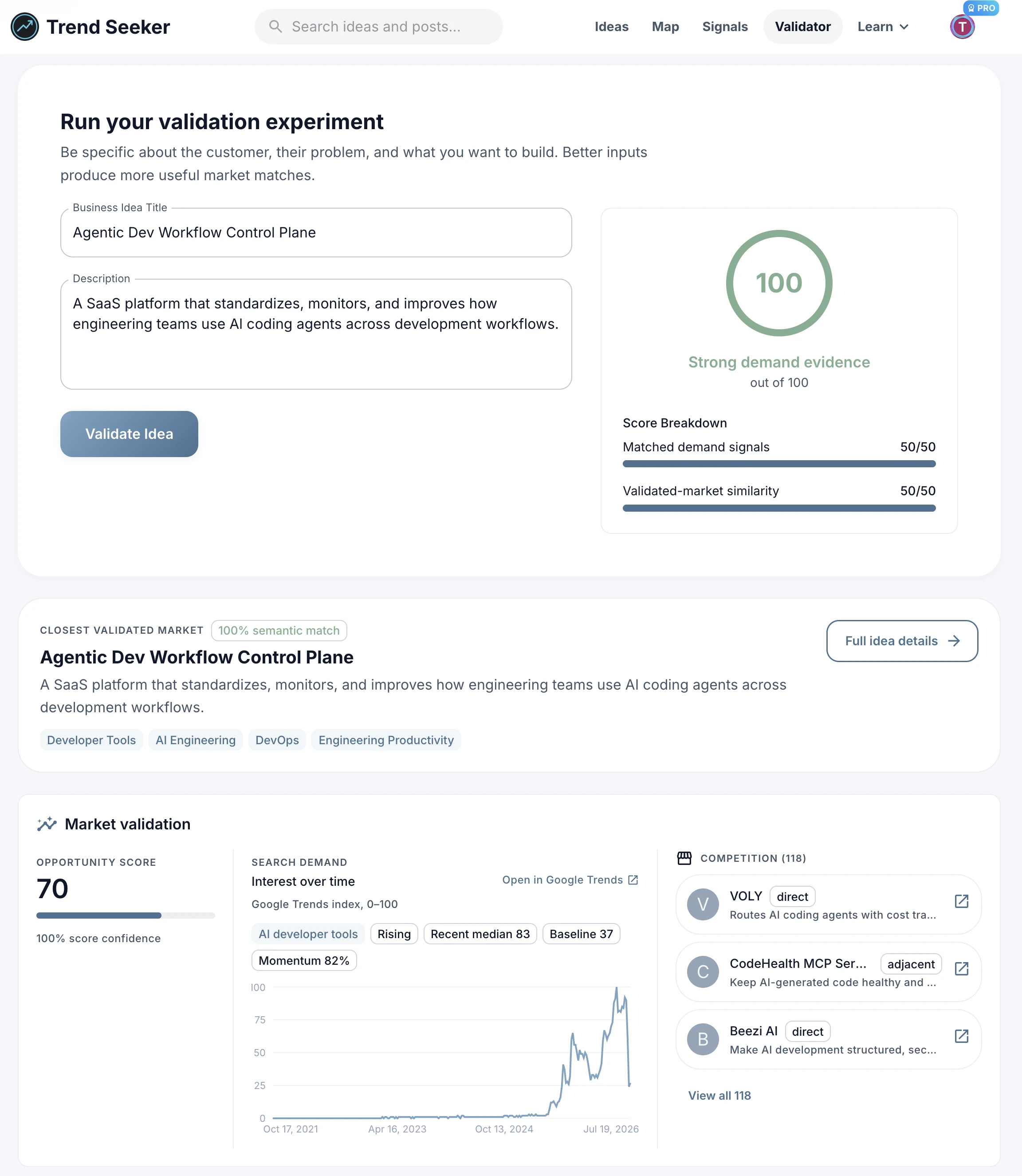
The validator now brings the useful parts of a match into one result. You can compare the overall score and its two components, open the closest validated idea, check its opportunity score and Google Trends history, inspect nearby competitors, and move through source-specific evidence tabs.
Less Waiting and Fewer Stale Views
We also reduced repeated data requests, fixed stale live-feed records and a pagination loop, and moved expensive cache refreshes through queues. The result should be quicker page changes and fewer views that lag behind newly processed evidence.
A Separate Guide to the Research Flow
We also published a step-by-step guide to researching a business idea with market signals. It explains the two discovery routes, why research should move into the selected idea's attached signals, how to compare demand with launch competition, and when to validate a specific product angle.
Ready to find your next business idea?
Explore validated business ideas backed by real user demand.